Startup Funding

Related Guides

Trending

The most popular articles on Startup Funding in the past day.

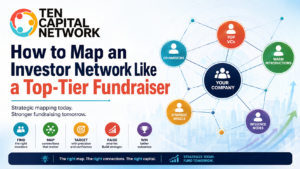
How to Map an Investor Network Like a Top-Tier Fundraiser

7 min read How to Map an Investor Network Like a Top-Tier Fundraiser Most founders approach fundraising backwards. They build a pitch deck first, then start scrambling to find investors. The best founders do the opposite: they build an investor network map before they ever ask for capital. Investor mapping is no longer optional. In today’s market, capital is concentrated in highly connected networks. The founders who understand those networks gain faster introductions, higher response rates, and better fundraising outcomes. [1] An investor network map is more than a spreadsheet of venture firms. It’s a strategic intelligence system that identifies: Which investors actively fund your sector Who co-invests together Which partners lead rounds Where warm introductions exist Which firms are deploying capital now How influence flows across your market The goal is simple: stop pitching random investors and start targeting connected capital. Step 1: Define Your “Ideal Investor Profile” Before researching firms, define exactly who should invest in your company. Your investor profile should include: Stage Pre-Seed Seed Series A Growth Sector Focus AI Fintech Healthcare Climate SaaS Deep Tech Geography U.S. Europe LATAM Southeast Asia Check Size Angel: $25k–$100k Seed VC: $250k–$2M Institutional: $2M+ Portfolio Alignment Similar companies Competitive adjacency Market thesis overlap This narrows your universe dramatically and prevents wasted meetings. Strategic investor mapping starts with precision, not volume. [3] Step 2: Build Your Initial Investor Universe Most founders stop after listing “top VCs.” That’s a mistake. You want layered investor categories: Tier 1: Dream investors Tier 2: Active specialists Tier 3: Strategic angels Tier 4: Syndicates and microfunds Tier 5: Corporate venture arms Use research platforms to identify active investors: Crunchbase AngelList PitchBook LinkedIn OpenVC Demo Day lists Podcast appearances Conference speaker rosters AngelList and Crunchbase are especially useful for filtering by stage, geography, and sector focus. [2] Your first pass should identify 50–100 relevant investors. Not all will matter equally. That’s where network analysis begins. Step 3: Identify Co-Investment Patterns The most important fundraising insight is this: Investors rarely invest alone. VCs operate in clusters. Some firms consistently co-invest together. Some angels follow specific lead investors. Some funds specialize in certain ecosystems or accelerators. Your job is to map those relationships. For every investor, track: Recent deals Co-investors in each round Lead vs follow behavior Repeat founder relationships Shared board members Accelerator affiliations You’ll quickly notice patterns. For example: Investor A always co-invests with Fund B Angel C appears in nearly every AI infrastructure seed round Fund D follows YC companies aggressively This transforms your fundraising strategy from “cold outreach” into network navigation. Network analysis helps startups identify the most connected and relevant capital pathways. [6] Step 4: Build a Warm Introduction Graph The highest-converting fundraising channel is still the warm introduction. But founders misunderstand warm intros. A warm intro is not “someone knows someone.” A strong warm intro comes from: Portfolio founders Repeat co-investors Trusted operators Existing LP relationships Shared accelerators Prior successful founders Create a relationship graph with three levels: Hot Connections People who know the investor personally and can directly recommend you. Warm Connections Second-degree relationships through founders, operators, or syndicates. Cold Connections No direct path, requiring content, traction, or outbound strategy. This becomes your investor access map. One warm introduction from a trusted founder can outperform 100 cold emails. Step 5: Score Investors by Probability Not all investors deserve equal attention. You should rank investors using a scoring model. Suggested scoring categories: Category Weight Sector Alignment 30% Stage Match 25% Recent Activity 20% Warm Intro Access 15% Geographic Fit 10% An investor actively funding your exact category within the past 12 months should rank far higher than a famous but inactive firm. The best founders focus on investors currently deploying capital, not just recognizable names. [4] Step 6: Track Investor Momentum Signals Investor mapping is dynamic. Funds evolve constantly. Some firms: Slow deployment Change thesis Raise new funds Shift stages Replace partners Pause investments You need momentum signals. Watch for: New fund announcements Hiring activity Recent lead rounds Increased conference appearances Podcast interviews Public market commentary Regulatory themes If a fund recently raised a new vehicle, deployment pressure rises significantly. That’s opportunity. Step 7: Map Influence Nodes Every ecosystem has hidden power centers. Sometimes the most influential person isn’t a VC partner. It may be: A super angel Accelerator MD Startup attorney Banker Founder with strong syndicate pull Scout program operator These people act as network bridges. One introduction from a highly connected node can unlock dozens of investor conversations. Mapping influence is often more important than mapping capital itself. Step 8: Organize Your Investor CRM At this point, you’re not building a contact list. You’re building a fundraising operating system. Your CRM should track: Investor name Fund Partner focus Last investment Intro path Relationship strength Follow-up timing Meeting notes Objections Interest level Next action Most founders lose fundraising momentum because they fail to systematize follow-up. Professional fundraising requires process discipline. Step 9: Create an Investor Narrative Strategy Every investor cluster responds to different narratives. Examples: AI investors care about infrastructure defensibility Climate investors focus on regulatory leverage Fintech investors care about distribution and compliance Deep tech investors prioritize technical moat Your investor map should include messaging angles for each segment. The best founders customize: Deck emphasis KPI framing Market sizing Technical depth Competitive positioning Fundraising is not one pitch. It’s a network-specific communication strategy. Step 10: Build Relationships Before You Need Capital The worst time to meet investors is when your runway is collapsing. The best founders start relationship-building 6–18 months before raising. This creates: Familiarity Credibility Progress tracking Trust accumulation Experts recommend identifying 20–30 aligned investors early and nurturing relationships over time. [5] Investors fund momentum they’ve observed, not just stories they’ve heard. Final Thoughts The modern fundraising market is not driven by access to information. Everyone has access to databases. The advantage now comes from understanding networks. Investor mapping gives founders: Better introductions Faster diligence Higher conversion rates Stronger syndicates More strategic investors The founders who win fundraising

How to Tell A Story

2 min read How to tell a story. What makes a story? At its core, a story consists of a beginning, middle, and end. If it’s a good story, that beginning, middle, and end will take you on a journey. If it’s a great story, it’s likely one you will never forget. So, what does the art of storytelling have to do with your startup? The ability to tell a story gives you the means to make your company memorable. When pitching your business plan, use the story format for a more significant impact and to connect with investors. Start with the problem you faced in the industry (the beginning). Show how you couldn’t find a solution (the middle). Show how you created your solution (the middle). Highlight the challenges you overcame (the end). Show the current business status and your upcoming plans (the end). After you address the issue of not finding a solution, show how others are now coming to you for that solution. Along the way, you can talk about how you built the team and chose a go-to-market strategy. Remember, it’s about taking the investor on a journey, so make it as memorable as possible. Each element of the story should highlight one aspect of the business plan. Remember to keep your audience engaged throughout the pitch when contemplating how to tell your investors a story. Make sure your presentation has direction and that there’s a beginning and an ending. This makes the journey worth it. Read More TEN Capital Education Here Hall T. Martin is the founder and CEO of the TEN Capital Network. TEN Capital has been connecting startups with investors for over ten years. You can connect with Hall about fundraising, business growth, and emerging technologies via LinkedIn or email: hallmartin@tencapital.group

To Raise Funding

2 min read. To Raise Funding First-time fundraisers make many mistakes. Here’s a list of key points to consider before your next meeting with an investor for your startup. It’s show, not tell. There’s an old saying: If you tell me, it’s an essay. If you show me, it’s a story. To raise funding, you have to show, not just tell. Forecasting alone doesn’t close the round. You must demonstrate progress towards it. Never show up to an investor meeting or call without something new in hand to show your growth story. Always talk about a customer and their engagement with your product or team. Show how the team is making things happen. Show how other investors are interested in committing funds.  Show how the product is working and what it is doing for the customer today. You must own it. In raising funding, just as in running your business, investors look to see if you own it. Do you own the challenging problems, or do you avoid them? Do you own the core business or delegate it to someone else?  Do you abide by the contracts you sign or try to duck out when it goes against you? Investors are looking at how you run your business to see if you own it. So, in the fundraise, do you own the numbers?  Do you own the investor relationship? Do you own the results you show them after the fundraise? Read More TEN Capital Education Here Hall T. Martin is the founder and CEO of the TEN Capital Network. TEN Capital has been connecting startups with investors for over ten years. You can connect with Hall about fundraising, business growth, and emerging technologies via LinkedIn or email: hallmartin@tencapital.group

Three Important Questions to Ask Before Investing

2 min read Three Important Questions to Ask Before Investing The startup world is full of big ideas. Entrepreneurs have grand plans to make these big ideas a reality, and in some cases investing in these plans can lead to a hefty ROI for investors. But how do you know if this startup is the one to invest in? We’ve boiled this down to three main questions to ask before investing in a startup company. If even one of these answers is wishy-washy, you may want to consider saving your investment for a company in steadier waters. Let’s take a look at what these three questions are. Do They Have Sufficient Traction? The first question to ask is if the startup has sufficient traction.  You can track them on their sales growth, team changes, product development, and fundraise.  As you receive reports, you can start to build out a list of crucial traction points– leads, sales, channels, etc.   As one investor said, “I don’t invest in dots. I invest in lines.”  It’s essential to build out a picture of how the business is growing. By watching the deal over time, you can better understand it and hopefully see an upward trajectory, at which point an investment makes sense. Are They Serious? Here are a few signs that an entrepreneur may not take the business seriously enough to be successful: Job titles are overly vital to them, and they are generally more concerned with receiving titles and credit for the work than they are about the actual work. They are not focused on the customer. In fact, they may not even have a clear understanding of who their customer is or what that customer wants. They don’t take responsibility for problems the startup may have. They blame others for the issues and may claim there can be nothing to fix the problem.  Know your entrepreneur. An entrepreneur who isn’t committed to the cause will raise funding and ultimately waste it. You do not want to invest money in those who aren’t going to see it through. Do They Have a Well Thought Out Plan? They might have a great idea, but they’ll need to do more than just lay out a slide deck with goals they hope to achieve. A promising startup must be able to back it up with a well-thought-out plan to accomplish those goals. Here are some questions you can ask to get a better idea of what kind of plan they have in place: How will they generate leads, and what does that look like? What is their current sales pitch/angle, and how will it work for them? Where are their customers coming from, and how do they make the sale? It shows potential for investment if they’ve done their homework and have clear answers and processes in place. Read More TEN Capital Education Here Hall T. Martin is the founder and CEO of the TEN Capital Network. TEN Capital has been connecting startups with investors for over ten years. You can connect with Hall about fundraising, business growth, and emerging technologies via LinkedIn or email: hallmartin@tencapital.group

Fundraising 101

2 min read Fundraising 101 Are you considering starting a round of funding for your startup? If this is your first time running a raise, you likely have a lot of questions. In this Fundraising 101 guide, we will share when you should consider starting a round of funding, what type of funding to consider going after, how to prepare, and how long it will take. Read below to better understand the basics of fundraising for your startup. When to Raise Funding Most founders go out for a fundraise prematurely because they need money, not because they are ready for fundraising. Consider the following to understand when it is best to raise funding: Do you have a compelling idea that you can articulate? Do you have a validated customer, market, and product lined up? Are your investor documents prepared? Your pitch deck will change over time, but it always needs to show the core product, team, and fundraise. Can you demonstrate the product, even at an early stage? Can you show customer interest through engagement as well as revenue? Have you spoken with some investors to identify what risks they see in the deal? Do you know how you can mitigate those risks? Only after completing the above preparations should you consider launching your fundraise. You can then successfully engage investors with your deal, and remember to never show up to an investor meeting empty-handed. Always have some customer engagement to discuss. Types of Funding Before choosing a type of funding, consider the following: Investigate every kind of funding and think about where it may fit into your overall funding plan. It’s most likely that you will use two or three types of funding over the life of your business. To understand the type of funding you should look for, ask: “How will you pay the investor back?” For example, if you plan to pay back when you sell the business, equity funding should be considered. On the other hand, if you plan to pay back out of the company’s cash flow, then debt funding is a better choice. If you have a consumer-facing product, consider crowdfunding which offers both debt and equity options. Break your funding down into parts, and consider using more than one type of funding for your business. How to Prepare for a Raise Before launching your fundraise campaign, prepare your business, complete your investor documents, and build your investor network. Preparing your business is the first step in preparing for a raise. The preparation consists of checking in with your team, the board, and both potential and current investors to gain alignment- your fundraise launch should not come as a surprise to them.  Next, complete your investor documents, including a pitch deck, financial proforma, and diligence room. Your financial proforma should lay out how much you should raise and what you will do with it. If you’re unsure how to set this up, write down your current revenue and the revenue you predict to have in the next 24-36 months. From this, you can extract how much funding you will need to raise and how many people you’ll need to hire. Finally, your pitch deck should tell the story of how your business makes money and why it will succeed. Finally, build your investor network. Make a list of investors to contact, including existing investors. Set up a few initial meetings and tell the prospective investor you plan to launch a fundraise in three months. This removes the pressure from the investor and often elicits feedback on how much to raise, how to structure the deal, and more. What Are Fundraising Differences by Stage In raising funding over the life of the startup, you’ll find there are differences in the fundraise at each stage. The goal at the Seed stage is to show you can sell the product. At this stage, the investors will look primarily at the team since there’s little product or revenue. However, you will still need to show a working prototype and initial customer validation. Finally, you must convince the investor that customers will pay for the product and use it. At the Series A stage, the goal is to show you can grow the business. At this stage, you need to establish a repeatable and predictable process for acquiring the customer, delivering the service, and retaining them. Show a sales funnel with prospects tracking through the process of turning into customers.  At the Series B stage, the goal is to show you can scale the business. You need to show you have growth drivers built into the business that scales the company at this stage. This includes systems that can drive scale growth, such as a partner network, sales force capability, and expansion into new markets with the same platform. At each stage, the pitch deck will need to reflect the goal for the fundraise and show what the business is doing to achieve it. Fundraising Timeline As a rule of thumb, for every $1M of funding you want to raise as an early-stage startup, you should expect one calendar year to grow it. This includes time to prepare the company, the investor documents, the pitch, contacting, pitching, and following up with investors.  It’s best to have your pitch deck and financial projections prepared before the fundraise, as well as a primary data room with the essential documents investors expect. This shows you have the fundraise well organized. Investors have their diligence process and are remarkably busy, so you have to work through their schedules. Fundraising should be a full-time job for the CEO, with support from the team for document preparation. The first few investors are the most difficult as no investor wants to go first. Therefore, this stage takes the most time. Once you reach 50% of your fundraise goal, you can estimate the remainder of the raise will take about 30% less time than the first half of the raise. The process may run faster if

Funding Analytics–How it helps you raise funding

2min read Funding Analytics–How it helps you raise funding Fundraising is moving from a local exercise to a global one.  One can still get a loan from a local bank or an equity investment from a local angel group, but the availability of capital throughout the world awaits those who know where to find it. Investment Analytics shows investors how to make better investment decisions.  Funding Analytics shows entrepreneurs how to find better investors.  By researching the track record and criteria of venture capital funds, private equity funds, and angel group portfolios, entrepreneurs can more accurately target the right investor group for their deals. Funding Analytics includes the current market rate for valuations — always a key decision in negotiation with investors. Analytics shows the best way to approach investors and keep them informed of your progress. Funding Analytics shows which investors have funds ready to deploy versus those who are still raising their next fund. Funding Analytics shows the required due diligence documents and how to build them. Total capital investment throughout the world is over $100 Trillion. The funding is there — to find it you’ll need Funding Analytics. Read More TEN Capital Education Here Hall T. Martin is the founder and CEO of the TEN Capital Network. TEN Capital has been connecting startups with investors for over ten years. You can connect with Hall about fundraising, business growth, and emerging technologies via LinkedIn or email: hallmartin@tencapital.group

How to Identify Quality Companies for Investment

3 min read When starting out, it can be difficult to know how to identify quality companies for investment. In funding startups, investors need to find a source of deal flow that provides venture-fundable deals. Venture-Fundable Deals Venture-funded companies typically share these characteristics:   Recurring or repeat revenue business model   Doubling revenue year over year   Tech-enabled   Strong team with industry experience   Large target market allowing the firm to scale In searching for a startup in which to invest, you should look for all of these characteristics. Learn About Sectors Before Investing Many startup investors begin with a portfolio theory approach in which one makes a few investments across a broad range of sectors. I often hear, “My strategy is to invest in good deals.” This is easier said than done. A broad-based investing approach requires the investor to come up to speed on each and every sector. That’s a lot of homework for an investment in one or two deals. Some investors choose to focus on a few key domains and become an expert in those areas. By diving deep, one can understand the trends, challenges, and factors that drive company success. There’s a risk that if you have too many companies in a sector, you are at risk for major disruptions. If the sector is broad enough, you can move to new areas within the space as it matures. How to Find Deals in a Sector To find deals in a sector, you can search Crunchbase for industry-specific reports. Pitchbook produces funded reports by sector by subscribing to their daily newsletter. Conferences are a great place to find personal introductions and meet with new startups. Also, venture capital is evolving into service models in which they not only fund the companies but also help with operations such as sales, CFO, etc. It’s not hard to find a list of VC firms focused on a sector. Identifying the Risks Every sector comes with its risks, such as regulations. Also, disruption from new technologies is an ever-present risk in the industry. By spending time with startups and investors in the space, it becomes clear where the threats come from and what one can do to mitigate the risk. Read more on the TEN Capital eGuide: How to Invest in a Startup Hall T. Martin is the founder and CEO of the TEN Capital Network. TEN Capital has been connecting startups with investors for over ten years. You can connect with Hall about fundraising, business growth, and emerging technologies via LinkedIn or email: hallmartin@tencapital.group

Startup Fundraising Basics

2min read Most startups need additional capital to help launch or grow their business. One way to obtain this additional capital is to raise funds via investors. In this article, we cover the basics of startup fundraising including if you should raise funding, when you should raise funding, how much funding you should raise, and how to milestone your raise.  Should Your Startup Raise Funding? Before raising funding, consider if you should raise funding for your startup. Ask why you need funding and consider if you have a specific need for funding that is tied to growing the business.  If you have a business that is on a high growth trajectory, then consider venture funding. If the business is not high growth or you have no vision of selling it, then consider other forms of funding such as SBA loans or revenue-based funding.  Investors expect a return in the ballpark of five times their investment in five years. Angel and venture capital funding goes to those startups. Other factors to consider for venture funding include the following: You have a large addressable market. You are building a business that is scalable. You are using a recurring revenue monetization model. You are building a platform-based business rather than a single product. You plan to sell the business rather than keep it for a lifestyle business.  Finally, you have built enough of the business to prove product and market validation; the product works and people will pay for it.  When to Raise Funding Most founders go out for a fundraise prematurely because they need money and not because they are ready for fundraising. Consider the following to understand when to raise funding: Have a compelling idea that you can clearly articulate. Have a validated customer, market, and product lined up. Have the investor documents been prepared? While you will always be changing the deck, it needs to show the core product, team, and fundraise. Be able to demonstrate the product even at an early stage. Show customer interest through engagement as well as revenue. Talk to some investors to identify what risks they see in the deal then show how you mitigate those risks. When you have these things done, then consider launching your fundraise. Engage investors with your deal and remember to never show up to an investor meeting empty-handed. Always have some customer engagement to discuss. How Much Funding to Raise When raising funding consider how much you should raise. Start with the overall amount of funding required to take the business to cash flow positive. This is often a fairly large number for platform-based businesses in a high-growth sector. Take the overall amount of funding and break it down into milestone raises. At the early stage of the business, the valuation is low. As you build the team, the product, and the revenue, your valuation will go up. For the first round of funding raised as little as you need to reach the next milestone. If you raise too much funding in the first round you will be giving away too much equity. Save the larger rounds of funding for later when you have a much higher valuation. Pre-seed rounds are often at $250K, Seed rounds at $500K to $750K, and Series A rounds at $1M to $5M. Each round will cost you 20% of the equity. Milestone the Raise Founders often want to compress their fundraise into one round for the sake of efficiency. While this may sound like a good idea, it’s actually an expensive one for the founder. Raising too much money in the early stages will cost the founder equity dilution. The valuation of the startup is low at the beginning and will rise with more products built and revenue generated. Raise a small amount upfront to get the business going such as $250K. If you try to raise less than $250K, most angels and venture capitalists will not consider this enough to build something meaningful. Take your overall fundraise and break it into smaller milestones such as $500K for a seed round. It’s often the case that you will need to raise another $500K a year later which some call a seed plus round.  It’s still seed funding and comes at the same terms as before. But it’s easier to raise because you broke a $1M raise into two milestones. This strategy lets you raise funding and then work on the business. For the next round, you’ll need some time to build the product and close customers. A rule of thumb is it takes one year to raise $1M. A $500K raise will come in closer to half a year. When you raise funding it should be a full-time job. The key here is it doesn’t have to be a full-time job for the entire year.   Read more on the TEN Capital eGuide:  How to Prepare for a Fundraise Hall T. Martin is the founder and CEO of the TEN Capital Network. TEN Capital has been connecting startups with investors for over ten years. You can connect with Hall about fundraising, business growth, and emerging technologies via LinkedIn or email: hallmartin@tencapital.group

Starting a VC Fund: What You Need to Know to Succeed

2 min read. If you have a track record for successfully investing, you may consider starting your own fund. At the time of writing, there are over 4,000 micro-VC funds in the US alone. Most of these are funds within the $25M to $50M range. These funds are led by those who ran sidecar angel funds and invested their own money into startups. Some did well, or are experienced VCs who set out to run their own fund. What do you need to know to successfully start your own VC fund? You need to be able to find and screen startups successfully. Let’s take a closer look at how to do this. Analyzing Market Segments In running a fund it’s important to analyze market segments. First, evaluate the leading companies in the market. Are there any leaders that stand out, or are all the companies competing head-to-head with the same approach? Highlight the supply chain to show who has control of the market; is it the producer or the consumer that drives the price? Discuss the introduction of new technology and its impact on the current market equilibrium. Will it shift control from the producer to the consumer, or vice versa? Review the number of companies playing in the segment and discuss the resulting fragmentation. Highlight the total available market for the companies in the segment. Identify companies within the market that stands out for competitive advantages such as network effects, virality, recurring revenue models, etc. Conclude with a proposal to pursue investment in a company in the market segment. Determine Market Size One of the key selling points for a startup is its potential market size. There are several ways to find it for your potential startup investment. The easiest way you can find market size is to buy a market research report. These typically run anywhere from $5K to $20K.  You can also contact the trade association related to your industry. These associations are most often located in Washington D.C. They are located in Washington D.C. as they provide government advocacy in addition to industry support. The association’s website typically provides stats on the industry, including market size and sector breakdowns. These sources require more digging but are often more reliable than market research reports. Analyzing Startups Here’s how to analyze a potential company for investment: First, identify a recent event for the target company, such as entering a new market. Discuss how the company can disrupt the newly-entered market with its expertise and business model. Talk about the positives you see in the company’s financials and market position. Express caution based on any concerns about the business including product/market fit, management team, or cost structures. Discuss macroeconomic issues, both positive and negative. Conclude with a recommendation to pursue an investment based on the positives outweighing the negatives, or to avoid an investment based on the negatives outweighing the positives. Read more on the TEN Capital eGuide: How to Raise a VC Fund Hall T. Martin is the founder and CEO of the TEN Capital Network. TEN Capital has been connecting startups with investors for over ten years. You can connect with Hall about fundraising, business growth, and emerging technologies via LinkedIn or email: hallmartin@tencapital.group

Site Map

Scroll to Top