Startup Funding

Related Guides

Trending

The most popular articles on Startup Funding in the past day.

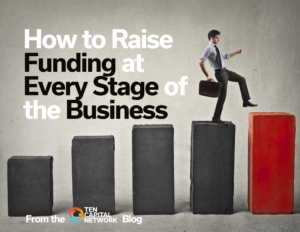
How to Raise Funding at Every Stage of the Business

1 min read Crowdfunding can be used to raise funding throughout the life of a business.  When the idea of a new business strikes you, and there’s nothing built yet, then you should run a donations campaign–ask family and friends to donate $10K collectively.  Make sure they understand that no one is getting paid back.  The value of this step is that it establishes a network to support your business.  The money can be used for some initial costs such as filing patents, building websites, and starting work on a prototype. Rewards The next step is to use a Rewards/Prepay campaign to pre-sell 50 units of your product.  It can be anything.  The key here is that you start to build your customer network.  If you can’t presell 50 units, then you have a product problem that needs to be solved first before you go any further.  The funding you raise should be enough to build the first version of your product. Crowdfunding Campaign With a successful rewards campaign behind you,  you now move towards turning those customers into investors using the Texas Intrastate crowdfunding campaign.  The Texas Intrastate law gives anyone the ability to invest in your business.  Again, the funding helps, but building your network is the crucial point.  If all fifty of your Prepay customers invested in your business you now have fifty brand ambassadors supporting your business–not trivial support by any means. With support from your customers, and now investors in your business, you approach angel investors and start to raise funding to grow the business.  Angels invest $250 to $2M to grow a working operation.  When you arrive at the angel investors’ door, they are expecting you to have a product at some stage of usage and some revenue.  The previous steps give you the ability to do that. If you need more funding, then you can go back and raise revenue-based funding.  The investors at this stage take a piece of the revenue as payment rather than an equity stake.  If you find yourself having trouble raising funding, it may mean that you skipped some key steps. You should go back and fill in the gaps of building your support network and your customer base before proceeding. Read more in the TEN Capital eGuide: http://staging.startupfundingespresso.com/how-to-raise-funding-eguide/ Hall T. Martin is the founder and CEO of the TEN Capital Network. TEN Capital has been connecting startups with investors for over ten years. You can connect with Hall about fundraising, business growth, and emerging technologies via LinkedIn or email: hallmartin@tencapital.group

How to Raise Funding – A Little at a Time

1 min read Traditionally fundraising takes a tremendous amount of time on the part of the startup CEO. Some CEOs drop everything to run the fundraise.  I advise against spending too much time fundraising but instead set up a system to help with the fundraise. With the right use of online tools (analytics, CRM, Drip campaigns, etc) the CEO doesn’t have to let fundraising become a huge distraction. Building a list of investor prospects and keeping them informed of your progress, the CEO can reach out to ask for an investment at the right time. Instead of raising two years’ worth of funding, the CEO can raise a few months which is a great deal easier. This type of funding works best for early stage, and those with recurring revenue business models. These techniques were popularized by crowdfunding but can be applied to accredited investor raises as well. As investors see more and more deal flow, they need help in finding, qualifying, and following up the deals. At TEN Capital we let the investor select the deals they want to see and then send updates only on those deals. We work with the startups to build upgrades to share with interested investors, All of this happens online. At some point, interested investors set up a call to talk with the CEO and later they decide to invest or pass. Most of the process if not all takes place online. Read more the TEN Capital eGuide: http://staging.startupfundingespresso.com/how-to-raise-funding-eguide/ Hall T. Martin is the founder and CEO of the TEN Capital Network. TEN Capital has been connecting startups with investors for over ten years. You can connect with Hall about fundraising, business growth, and emerging technologies via LinkedIn or email: hallmartin@tencapital.group

Thinking Out of the Box: Creative Sources of Funding for Startups

2 min read Finding funding is an indefinite ongoing process for startup organizations. Equity funding is a typical go-to for many startups, however, it is not always the most ideal form of funding. Below are a few creative sources you can look to for your next raise. Loans Loans are debt instruments that must be repaid. Startups can find it difficult to get a traditional loan from a bank. The Small Business Administration offers several loan types for early-stage companies. These loans come with personal guarantees and cannot be closed out with the dissolution of the business. There’s also debt through the use of credit cards and microloans. It’s difficult to use debt to pay for your core product development. Debt makes sense when you have some revenue coming in to pay for the loan.  There are other types of debt including accounts receivable factoring in which you raise money on what customers owe you. There’s also equipment financing in which the equipment collateralizes the debt. Factoring works when you have to pay customers and want to shrink the cash float from the time you build the product until the time you receive payment. Equipment financing works well if you need machinery to build your product or run your business. Credit Lines A line of credit is a short-term loan from the bank to help smooth out cash-flow cycles. Unlike a bank loan in which you receive an injection of funds, a line of credit lets you draw upon it when you need and pay it back when you can. The interest rate on a line of credit is substantially lower than credit cards and offers a higher borrowing limit than most credit cards. However, the interest rates are often variable and not fixed. A secured line of credit is backed by an asset, while an unsecured line of credit is not. An unsecured line of credit will come with a higher interest rate. There are both personal and business lines of credit. Personal lines of credit are often secured by personal property. For a business line of credit, the bank determines your credit limit based on the business assets and cash flow. The bank determines the interest rate by adding the interest to a margin that is affected by your credit history, profitability, and business risk. The line of credit is a useful tool for early-stage businesses to help with cash-flow issues. Licensing You may be able to reduce the amount of funding needed to grow your business by licensing your technology to others. Instead of building and selling a product, you can license to others who will build and sell the product. In licensing, you must have a patent to protect your technology and oftentimes a series of supporting tools to help those who license your technology for using it.  Licensing brings the following benefits: It reduces the amount of capital you need to raise. It can generate a substantial return given the costs are low. The risk of product failure is shifted to the licensee. The disadvantages are: You don’t control how it is used. Your licensee may later compete with you. You don’t receive the full revenue as if you had built and sold the product yourself. Licensees can also bring you new ideas for improvements on the technology. For applications requiring high-capital expenditures for building and selling the product, licensing is a good fit. Grants Grants are typically provided by government organizations to spur research and make a small contribution to the business. Commonly used grants include SBIR, Small Business Innovation Research, which provides phase 1, 2, and 3 grants that add up to $1M. You can search for grants at www.grants.gov. Grant funding is mostly one-time offerings and need not be paid back. They are non-dilutive which means they don’t take any space on the cap table. Use grants to cover costs that customers will not. For example, customers will not pay for basic research but only for finished products. Grants often come with rules on how they can be spent. Be careful in spending too much time with grants. I once worked with a company that had raised over $4M from grants over a five-year period. The team became experts at writing grant proposals but no one could sell, market, or do much of anything for a customer because for five years they focused on writing and winning government grants. Read more TEN Capital eduction:  http://staging.startupfundingespresso.com/education/ Hall T. Martin is the founder and CEO of the TEN Capital Network. TEN Capital has been connecting startups with investors for over ten years. You can connect with Hall about fundraising, business growth, and emerging technologies via LinkedIn or email: hallmartin@tencapital.group

Startup Organizations: Finding Funding

2 min read Every startup eventually asks the question: “Where will our funding come from?” There are several sources of funding that your organization can tap into. Some of the most common funding sources include consultation, contractor, crowdfunding, and supplier funding. Let’s take a closer look at each. Consultation Funding Consultation funding is using consultation work to pay the bills and salaries while you are building out your product. Consider looking for consultation work in addition to selling the product as some customers want more assistance in installing and using the product than in just buying the product itself.  The consultation also brings new insight into how the customer intends to use the product and what problem they are trying to solve. This is useful information to guide your product roadmap. Consulting work gives you more information about the market and the competition as you’ll encounter competitive solutions. This is also a great way to generate positive references to use when you launch your standard product into the market. While consulting may not be your ultimate goal, it can be a useful way to fund a portion of your product development. Contractor Funding Many enterprise software programs come from service businesses solving a problem for their clients. In searching for a solution on the market, they find none, so they build their own. Later, other clients come ready to buy it. This is one of the most overlooked forms of funding in the startup space. In contractor funding, you sell a customized version of what you want to build to an anchor customer for a substantial one-time fee and then use the funds to build out the platform you envision of which the customer gets a non-exclusive license.   The advantage here is you have a customer telling you exactly what they need and what they will pay for. They improve the product by testing it and telling you what changes to make. They become a happy customer that you can use to attract prospective customers. After three more of these engagements, you will have $1M of investment in your platform with zero dilution. Crowdfunding Crowdfunding can be sourced as prepayment for a good or service, or from accredited or non-accredited investors. Prepayments let you pre-sell your product before you build it. This works best for physical products that require funding for the design and manufacturing of the product. It’s a great way to test the market for a new product as it provides customer feedback on the product, price, and promotion. There are several platforms available for showcasing your product. There’s also crowdfunding from non-accredited investors. On these platforms, anyone can invest in your startup. It is for equity, so you need to understand the implications of it on your cap table. Finally, there’s crowdfunding from accredited investors which is no different than raising funding through angel investors and venture capitalists. The only difference is using a crowdfunding platform to find and engage the investors. There are a growing number of crowdfunding portals offering both general and specialized sites. Crowdfunding works well for startups with a product that is clear to grasp and easy to understand.  Supplier Funding Another source of funding is supplier funding. Supplier funding comes from those who provide services to your company such as contract manufacturing, software development, legal, accounting services, and more. Suppliers provide their services in exchange not only for cash but also for equity. This reduces the amount of equity funding you need to raise from investors. Contract manufacturers will invest in your business and in exchange they look for the startup to use their manufacturing services. Software development firms invest in startups by taking a portion of their software development fee in the form of equity. There are other examples, including lawyers and accountants who provide services in return for equity. This aligns their interest with your interest as the business must succeed for the equity to be worth something.  Hall T. Martin is the founder and CEO of the TEN Capital Network. TEN Capital has been connecting startups with investors for over ten years. You can connect with Hall about fundraising, business growth, and emerging technologies via LinkedIn or email: hallmartin@tencapital.group

Where To Source Funding

2 min read: A common funding source for launching and growing a business is equity funding. However, equity funding is expensive. Luckily, there are many other sources of funding you can take advantage of and put to use. This article will discuss several sources of funding your startup can consider.  Anchor Clients Anchor clients are those who prepay for a custom version of your product. They are typically more prominent companies that have special needs. If you are building an enterprise or consumer software product, consider looking for an anchor client to pay you to create a custom version of it.   Anchor clients provide funding and a precise specification of what they want. Unfortunately, they often hurry and want the solution yesterday, which means they will pay the best price. Also, anchor clients give you information about the market. Anchor clients have researched it and have not found the solution they want. These clients become good references to use when you launch your standard product into the market. One of your platforms may require more than one anchor client to fund a version fully. Take the funding you need to build your platform and divide it by three, then look for three anchor clients to cover it. Bootstrapping and Barter Bootstrapping uses your funds and initial customers to launch your business. Investors tend to appreciate you investing personal funds as it shows you have skin in the game in addition to sweat equity. Barter is a valuable tool to reduce cash expenditures. Consider providing your services to businesses that can provide you with something you need in return, such as bookkeeping, accounting, legal, and financial work. For investors, this demonstrates resourcefulness and the ability to negotiate. Accelerators and Incubators Accelerators and incubators provide startups with workspace, mentorship, pitch practice, and in some cases, funding. Sponsorships are by universities, companies, and entrepreneur collectives.  Accelerators provide an intensive program to help entrepreneurs prepare their business and product for an initial investment. The classes are usually small, around 5-10 companies. At the end of the program, the participants pitch to investors for funding.  Incubators offer a physical workplace with offices, administration, and meeting rooms. In addition, universities offer accelerators and incubators for students and faculty who want to commercialize research. The accelerator or incubator may have a fund from which it invests in startups who complete the initial program. Often, this takes the form of equity funding. However, some programs structure it as a grant, and In addition, they often sponsor demo days in which you pitch to prospective investors. Other Funding Sources There are several other funding sources to consider. Some examples include: Grants: consisting primarily of government-based funds that are one-time offerings and are paid back. Loans: This is debt funding that the business must pay back to the loaner.  Factoring/AR Funding: This includes selling your invoices and accounts receivables in return for cash. Equipment Leasing: using equipment for a contracted time instead of buying reduces cash burn and spreads out the payments. Line of Credit: A short-term debt used for smoothing out the cash-flow cycles. Crowdfunding: This is collected via a prepayment for products from clients/customers. Consultation Funding: Extending your product to include consultation services is a way to bring in additional revenue. Supplier Funding: This consists of contract manufacturing or software developers who provide upfront cash injections in return for a contract to build or design your product.    Hall T. Martin is the founder and CEO of the TEN Capital Network. TEN Capital has been connecting startups with investors for over ten years. You can connect with Hall about fundraising, business growth, and emerging technologies via LinkedIn or email: hallmartin@tencapital.group

Best Practices for Entrepreneurs Seeking Funding

2 min read Working with entrepreneurs every day who are going through the fundraising process. Over time, I’ve found some entrepreneurs employing practices that make the process go smoothly. For those who seek funding here are some best practices to consider in your fundraising efforts: Develop a relationship with investors early on. Entrepreneurs often say that they do not need funding right now so they don’t need to talk with investors. Ask when they will need funding and surprisingly the answer is usually six to twelve months later. I advise the entrepreneur to start developing relationships now. If you wait six months and then start looking you’re behind. In meeting with an investor the entrepreneur can state that he’s not ready for investment but then lay out the plans for developing the business. By building a relationship now and keeping the investor informed of your progress, the entrepreneur will be in a better position when it comes time to raise the funding. Have ready the executive summary, slide deck, and business plan with financials. It helps to have the core three documents – executive summary (one-page only), slide deck, and business plan already developed and ready to go. As the entrepreneur meets prospective investors he can use the appropriate docs for each meeting. Publish a periodical email newsletter for interested investors. In the fundraising process, some entrepreneurs send out email updates to highlight the progress of the company. Some come as often as weekly to show progress in sales, product plans, and other milestones. This shows the company’s ability to execute. Find a lead angel to develop a terms sheet and start off the funding round. By finding a lead angel and creating a terms sheet, the entrepreneur removes the biggest barrier to fundraising – the negotiation process. There are numerous angel investors who find the initial negotiation and due diligence process too time-consuming. By eliminating this hurdle, the entrepreneur opens up the deal to a larger number of investors. Make the deal terms “investor-friendly” Of course, every deal must be negotiated. The harder the terms for the investor to accept the longer the time it will take to negotiate. By making the terms “investor-friendly” through reasonable pre-money valuations, preferences, and other terms, the faster the process goes. Due diligence docs to a password-protected website The due diligence phase can be sped up by having all the key docs already available. I’ve seen some entrepreneurs put everything on a protected website and then give out the password to interested investors. This knocks down the hurdle of trying to send 600 MB worth of documents through the email system. Quarterly email newsletter after funding  It’s important to keep investors up to date even after the funds are raised since investors can help in other ways. Some investors bring a rolodex of contacts while others bring experience and coaching. By keeping them informed of your progress and challenges, they may be able to help. This practice is also useful for when it comes time for follow-on fundraising. Feel free to try out our calculators and contact us if you would like to discuss your fundraise: http://staging.startupfundingespresso.com/calculators/ Hall T. Martin is the founder and CEO of the TEN Capital Network. TEN Capital has been connecting startups with investors for over ten years. You can connect with Hall about fundraising, business growth, and emerging technologies via LinkedIn or email: hallmartin@tencapital.group.

Fundraising 101

2 min read Are you considering starting a round of funding for your startup? If this is your first time running a raise, you likely have a lot of questions. In this Fundraising 101 guide, we will share when you should consider starting a round of funding, what type of funding to consider going after, how to prepare, and how long it will take. Read below to better understand the basics of fundraising for your startup. When to Raise Funding Most founders go out for a fundraise prematurely because they need money, not because they are ready for fundraising. Consider the following to understand when it is best to raise funding: Do you have a compelling idea that you can articulate? Do you have a validated customer, market, and product lined up? Are your investor documents prepared? Your pitch deck will change over time, but it always needs to show the core product, team, and fundraise. Can you demonstrate the product, even at an early stage? Can you show customer interest through engagement as well as revenue? Have you spoken with some investors to identify what risks they see in the deal? Do you know how you can mitigate those risks? Only after completing the above preparations should you consider launching your fundraise. You can then successfully engage investors with your deal, and remember to never show up to an investor meeting empty-handed. Always have some customer engagement to discuss. Types of Funding Before choosing a type of funding, consider the following: Investigate every kind of funding and think about where it may fit into your overall funding plan. It’s most likely that you will use two or three types of funding over the life of your business. To understand the type of funding you should look for, ask: “How will you pay the investor back?” For example, if you plan to pay back when you sell the business, equity funding should be considered. On the other hand, if you plan to pay back out of the company’s cash flow, then debt funding is a better choice. If you have a consumer-facing product, consider crowdfunding which offers both debt and equity options. Break your funding down into parts, and consider using more than one type of funding for your business. How to Prepare for a Raise Before launching your fundraise campaign, prepare your business, complete your investor documents, and build your investor network. Preparing your business is the first step in preparing for a raise. The preparation consists of checking in with your team, the board, and both potential and current investors to gain alignment- your fundraise launch should not come as a surprise to them.  Next, complete your investor documents, including a pitch deck, financial proforma, and diligence room. Your financial proforma should lay out how much you should raise and what you will do with it. If you’re unsure how to set this up, write down your current revenue and the revenue you predict to have in the next 24-36 months. From this, you can extract how much funding you will need to raise and how many people you’ll need to hire. Finally, your pitch deck should tell the story of how your business makes money and why it will succeed. Finally, build your investor network. Make a list of investors to contact, including existing investors. Setup a few initial meetings and tell the prospective investor you plan to launch a fundraise in three months. This removes the pressure from the investor and often elicits feedback on how much to raise, how to structure the deal, and more. What Are Fundraising Differences by Stage In raising funding over the life of the startup, you’ll find there are differences in the fundraise at each stage. The goal at the Seed stage is to show you can sell the product. At this stage, the investors will look primarily at the team since there’s little product or revenue. However, you will still need to show a working prototype and initial customer validation. Finally, you must convince the investor that customers will pay for the product and use it. At the Series A stage, the goal is to show you can grow the business. At this stage, you need to establish a repeatable and predictable process for acquiring the customer, delivering the service, and retaining them. Show a sales funnel with prospects tracking through the process of turning into customers.  At the Series B stage, the goal is to show you can scale the business. You need to show you have growth drivers built into the business that scales the company in this stage. This includes systems that can drive scale growth, such as a partner network, sales force capability, and expanding into new markets with the same platform. At each stage, the pitch deck will need to reflect the goal for the fundraise and show what the business is doing to achieve it. Fundraising Timeline As a rule of thumb, for every $1M of funding you want to raise as an early-stage startup, you should expect one calendar year to grow it. This includes time to prepare the company, the investor documents, the pitch, and contacting, pitching, and following up with investors.  It’s best to have your pitch deck and financial projections prepared before the fundraise, as well as a primary data room with the essential documents investors expect. This shows you have the fundraise well organized. Investors have their diligence process and are remarkably busy, so you have to work through their schedule. Fundraising should be a full-time job for the CEO, with support from the team for document preparation. The first few investors are the most difficult as no investor wants to go first. Therefore, this stage takes the most time. Once you reach 50% of your fundraise goal, you can estimate the remainder of the raise will take about 30% less time than the first half of the raise. The process may run faster if you have

Fundraising 101

2 min read Are you considering starting a round of funding for your startup? If this is your first time running a raise, you likely have a lot of questions. In this Fundraising 101 guide, we will share when you should consider starting a round of funding, what type of funding to consider going after, how to prepare, and how long it will take. Read below to better understand the basics of fundraising for your startup. When to Raise Funding Most founders go out for a fundraise prematurely because they need money, not because they are ready for fundraising. Consider the following to understand when it is best to raise funding: Do you have a compelling idea that you can articulate? Do you have a validated customer, market, and product lined up? Are your investor documents prepared? Your pitch deck will change over time, but it always needs to show the core product, team, and fundraise. Can you demonstrate the product, even at an early stage? Can you show customer interest through engagement as well as revenue? Have you spoken with some investors to identify what risks they see in the deal? Do you know how you can mitigate those risks? Only after completing the above preparations should you consider launching your fundraise. You can then successfully engage investors with your deal, and remember to never show up to an investor meeting empty-handed. Always have some customer engagement to discuss. Types of Funding Before choosing a type of funding, consider the following: Investigate every kind of funding and think about where it may fit into your overall funding plan. It’s most likely that you will use two or three types of funding over the life of your business. To understand the type of funding you should look for, ask: “How will you pay the investor back?” For example, if you plan to pay back when you sell the business, equity funding should be considered. On the other hand, if you plan to pay back out of the company’s cash flow, then debt funding is a better choice. If you have a consumer-facing product, consider crowdfunding which offers both debt and equity options. Break your funding down into parts, and consider using more than one type of funding for your business. How to Prepare for a Raise Before launching your fundraise campaign, prepare your business, complete your investor documents, and build your investor network. Preparing your business is the first step in preparing for a raise. The preparation consists of checking in with your team, the board, and both potential and current investors to gain alignment- your fundraise launch should not come as a surprise to them.  Next, complete your investor documents, including a pitch deck, financial proforma, and diligence room. Your financial proforma should lay out how much you should raise and what you will do with it. If you’re unsure how to set this up, write down your current revenue and the revenue you predict to have in the next 24-36 months. From this, you can extract how much funding you will need to raise and how many people you’ll need to hire. Finally, your pitch deck should tell the story of how your business makes money and why it will succeed. Finally, build your investor network. Make a list of investors to contact, including existing investors. Setup a few initial meetings and tell the prospective investor you plan to launch a fundraise in three months. This removes the pressure from the investor and often elicits feedback on how much to raise, how to structure the deal, and more. What Are Fundraising Differences by Stage In raising funding over the life of the startup, you’ll find there are differences in the fundraise at each stage. The goal at the Seed stage is to show you can sell the product. At this stage, the investors will look primarily at the team since there’s little product or revenue. However, you will still need to show a working prototype and initial customer validation. Finally, you must convince the investor that customers will pay for the product and use it. At the Series A stage, the goal is to show you can grow the business. At this stage, you need to establish a repeatable and predictable process for acquiring the customer, delivering the service, and retaining them. Show a sales funnel with prospects tracking through the process of turning into customers.  At the Series B stage, the goal is to show you can scale the business. You need to show you have growth drivers built into the business that scales the company in this stage. This includes systems that can drive scale growth, such as a partner network, sales force capability, and expanding into new markets with the same platform. At each stage, the pitch deck will need to reflect the goal for the fundraise and show what the business is doing to achieve it. Fundraising Timeline As a rule of thumb, for every $1M of funding you want to raise as an early-stage startup, you should expect one calendar year to grow it. This includes time to prepare the company, the investor documents, the pitch, and contacting, pitching, and following up with investors.  It’s best to have your pitch deck and financial projections prepared before the fundraise, as well as a primary data room with the essential documents investors expect. This shows you have the fundraise well organized. Investors have their diligence process and are remarkably busy, so you have to work through their schedule. Fundraising should be a full-time job for the CEO, with support from the team for document preparation. The first few investors are the most difficult as no investor wants to go first. Therefore, this stage takes the most time. Once you reach 50% of your fundraise goal, you can estimate the remainder of the raise will take about 30% less time than the first half of the raise. The process may run faster if you have
How Much Funding Should You Pursue?

2 min read How Much Funding Should You Pursue? This question is the place to start, but you’d be surprised how many startups either, don’t have an answer, or the answer is not well researched.  When I ask entrepreneurs how much they are raising, the automatic answer is $1M. It just seems like the thing to do. And when I ask what they are going to do with it, many seem unsure. Or they provide generalizations like, “We need it for marketing, hiring key personnel, or developing products” (and so on). The response from investors (myself included) is usually along the lines of, “No S!#t?” What’s The Plan? Before pursuing investments, one needs to consider how much to raise and how it will be used. Then, when you go to pitch investors, it should be clear from your financials exactly how you have come up with these specific funding requirements and how you plan to use the money.  Of course, it’s still an educated guess, but having these items researched and detailed in your business plan (and pitch presentation) will build more credibility with the potential investor. Figuring out how much you need to raise starts with: How much do you need for equipment, inventory, contract services (legal costs, marketing, sales, and more.)? This financial model is a MUST before setting the fundraising amount. The Magic Number I often recommend raising as little money as possible before you have customers and or sales because the valuation (how much the investor considers your company worth) will be pretty low. In addition, any money you raise in the beginning will cost a more significant portion of the equity in your company than follow-on investments down the road. In other words, the greater the risk, the greater the equity the investor will require. It’s also better to raise a lower amount (say $250K) to get the product up and running and sold to a few customers. Of course, you always present a larger round of funding later. Still, at that point, it should be a much better valuation for the entrepreneur–with the product and customer risks mitigated, you don’t have to give away as much equity. Also, for every $1M you are trying to raise, you’ll spend one year raising it and NOT doing much of anything else on your business. So raising only $250K will reduce the amount of time spent fundraising, allowing you to work on your product, marketing, sales, and team building. Feel free to try out our calculators and contact us if you would like to discuss your fundraise: http://staging.startupfundingespresso.com/calculators/ Hall T. Martin is the founder and CEO of the TEN Capital Network. TEN Capital has been connecting startups with investors for over ten years. You can connect with Hall about fundraising, business growth, and emerging technologies via LinkedIn or email: hallmartin@tencapital.group

Site Map

Scroll to Top