


Startup Funding

Search Startupfunding above or view our

Three Ways to Know Your Market Better

One of the key criteria in funding startups is the entrepreneur’s knowledge of the target market and customer. Size of market, growth rates, and segmentation are key components the entrepreneur should know well. In this post we’ll look at three ways to know your market better. The first place to look is on the web. You’ll need to first identify which industry(s) you’re in. From that you can find out several facts about your target market size. The next step is to find out what trade associations and conferences are related to it. You can contact the trade association and find out more about the market. Usually, the director of the association has the key market information you’re seeking and will make that available to you in an email or phone call. Their job is to foster the growth of their industry segment by informing others about it. The third step is to attend a trade conference. You’ll learn more from those on the exhibit hall floor than you can from articles or other means. It’s worth a day walking the show to get the details. Finally, avoid market research reports. These reports cost anywhere from $2,000 to $25,000. Most of these are simply a compilation from a direct mail campaign that is far from comprehensive. While they can be helpful they certainly aren’t worth the money. Best regards, Hall T.

Read More »

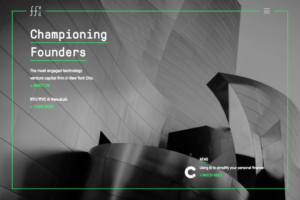
VC Profile: FF Venture Capital

Headquarters: New York, NY Sectors: cybersecurity, artificial intelligence, machine learning, hardware, drones, enterprise cloud software, and crowdfunding Description:  ff Venture Capital was founded in 2008 and since then has invested in 90+ companies and helped to create aggregate market value exceeding $4 billion. They were founded by John Frankel and Alex Katz, who are general partners at the firm, Alex also serves as CFO. The firm’s other general partners include David Tenten, Michael Faber, and Adam Plotkin. Their team of over 25 people actively works with founders to develop products, target markets, and accelerate growth. Their funding criteria seeks out those who create new technologies and build upon the expanding capabilities of technology to develop new markets, change behaviors, and solve important problems. They are looking for new ideas and business models before they become established themes, not once they have become mainstream. They want game changers and believe the best companies define their own categories. A few examples of their consistent investing themes include: deep software stack that enables new functionality, efficiencies, and cost savings; Low-cost/High-value networks that tend to gain new users at low marginal cost and improve the user experience with each marginal user. ff Venture Capital does not only provide capital but, every company receives support of their Acceleration Team, which provides hands-on and comprehensive guidance and resources to each of their portfolio companies’ management teams. With them they provide a team of expertise in communications, marketing and branding, recruiting, product engineering and strategy, financial modeling, account and budgeting, community management, and strategic and partner development. In all of their guidance they provide, ff Venture Capital’s main focus is to keep value over valuation. Recent Investments: Socure $13M / Series B Dashbot $2M / Seed (Lead) Estify $6.3M / Series B cielo24 $1.07M / Convertible Note Website: http://ffvc.com/  

Read More »

Food & Beverage Investments Quarterly Review

The Food and Beverage industry has seen a slow down in the quarterly investments. Peaking in the second quarter of 2015, the investment dollars have dropped substantially although the number of deals continues to remain constant if not slightly upward. You can see the investments and deals by quarter here: Quarter Funding (Food & Beverages) Deals (Food & Beverages) 2015 Q1 1090.68 140 2015 Q2 1263.43 142 2015 Q3 799.02 137 2015 Q4 939.69 133 2016 Q1 250.21 153 2016 Q2 395.32 143 2016 Q3 371.09 139 2016 Q4 3165.94 154  

Read More »

Top Investors in Food and Beverage Companies Over the Last 5 Years

The top investors for the last five years by number of deals puts Circle Up at the top of the list with 96 deals, followed by Accel Foods at 29, Food-X at 17, MassChallenge at 16, and 14 by Indie.Bio.  The list contains not only venture capital but funding portals, angel networks, and accelerator groups.  You can see the list here: Last Year Last 2 years Last 5 years CircleUp – 30 CircleUp – 75 CircleUp – 96 AccelFoods – 9 AccelFoods – 20 AccelFoods – 29 CAVU Ventures – 9 Food-X – 17 Food-X – 17 MassChallenge – 6 MassChallenge – 14 MassChallenge – 16 301 INC – 5 Indie.Bio – 12 Indie.Bio – 14 Food-X – 5 CAVU Ventures – 10 Khosla Ventures – 14 New Crop Capital – 5 301 INC – 7 Central Texas Angel Network – 12 S2G Ventures – 5 New Crop Capital – 7 Emil Capital Partners – 11 HSBC – 4 S2G Ventures – 7 Ben Franklin Technology Partners – 10 Indie.Bio – 4 Ben Franklin Technology Partners – 5 CAVU Ventures – 10  

Read More »

Food & Beverage Investments in Q4 2016

The Food and Beverage Industry has seen over $2.8B in funding in nearly 270 deals in Q4 2016. The Ingredients and Flavorings industry leads the way with over $2B worth of funding in 19 deals, followed by Candy & Snack Foods at $221M in 62 deals. Meat, Fish, and Seafood follow with $185M in funding. Check out the complete list of funding and deals by industry: Industry Funding Total # of Deals Ingredients, Flavoring & Condiments $2B 19 Candy & Snack Foods $221M 62 Meat, Fish & Seafood $185M 13 Non-alcoholic Beverages $115M 51 Alcoholic Beverages $73M 69 Food Safety & Preservation $53M 12 Fresh Foods $49M 10 Canned & Frozen Foods $48M 13 Wholesale Food Distributors $46M 6 Dairy Products $36M 8 Bottling & Distribution $7M 2 Food Service $4M 4 Total: $2.85B 269

Read More »

Venture Capital Seeks Food and Beverage Investments

The food and beverage space is seeing tremendous innovation.  Venture capitalists are now making investments into innovative food and beverage companies.   Target investments must bring innovation and offer a scalable business model.  Their food & beverage investments nearly all focus on replacing common food items.  Investments typically target technologies around plant-based protein.  Often, startups raising funding are developing new processes that could change what we eat.  Several trends top the list for venture capitalists.   Here are four food and beverage trends with Texas companies leading the way: Fermented flavors – fermentation brings health benefits and for soda lovers fermentation also provides a natural fizziness to the drink.  Salt and Time and Buddha’ Brew are two Texas-based companies leading the way Food safety testing—new testing tools such as in the field mass spectrometry, and food processors are gaining attention. Evaptainers uses evaporation cooling technology to provide refrigeration for foods  and Green Ocean Sciences has developed a field mass spectrometer for food testing. Next generation foods which include cold brew coffee such as High Brew Coffee and Chameleon Cold Brew.   New fruit and vegetable offerings include novel ways of packaging and distributing fruit and vegetables.  Rhthym Superfoods offers a new way of consuming Kale.   Veggie Noodles delivers vegetables in the form of pasta, and Beanitos offers beans in the form of chips. Floral flavors – adding herbal and plant flavors to foods and beverages such as Sway Water and Daily Greens. Here’s a list of the top 24 VCs in food and beverage investing: Sequoia Capital Benchmark Capital Accel Partners Greylock Partners Andreessen Horowitz Union Square Ventures First Round Capital Bessemer Venture Partners Kleiner Perkins Caufield & Byers New Enterprise Associates Founders Fund Lightspeed Venture Partners Foundry Group Index Ventures Khosla Ventures Social Capital Emergence Capital Partners True Ventures Floodgate Fund General Catalyst Partners CRV Spark Capital Battery Ventures Redpoint Ventures

Read More »

NDAs, Not on the First Conversation

Everyone once in awhile I’ll come across an entrepreneur who wants to tell me about his deal but before giving me any details wants me to sign an NDA which is a Non-Disclosure Agreement that requires the signer not divulge the details of the subject matter to anyone for a certain period of time (usually 2 to 5 years). To an angel investor this is a red flag. When an entrepreneur won’t even show me his one-pager without my first signing his Non-Disclosure Agreement that tells me his deal is not protected and most likely is not protectable. I advise entrepreneurs to have a one-pager ready to share with investors who show interest after a brief discussion. The one-pager should state what the business does but doesn’t necessarily go into details about how the IP actually works. If the discussion goes far enough that it enters the due diligence phase and the investor wants to see the “secret sauce” then it’s reasonable for the entrepreneur to ask the investor to sign an NDA, but not at the beginning of the first conversation. While I understand the entrepreneur’s concern about protecting his idea and subsequently his business, it’s difficult to generate interest among the investors when you can’t even tell them the basic concept. The entrepreneur should be able to inform the investor about what the product or service does at a high level and what performance advantages it has over other methods. My rule for signing NDAs is that I should know exactly what is being protected – the technology, the business model, the concept, etc. Signing an NDA without knowing this could mean the investor is signing away his ability to invest in any deal that is related to the entrepreneur’s target market or application. To carry out the conversation, I invite the entrepreneur to tell me about the non-confidential matters. “Just tell me what you can without an NDA.” This potentially keeps the conversation going. Of course, the first subject to discuss after receiving the one-pager is how can one protect the idea – patents, copyrights, trademarks, trade secrets, etc. Best regards, Hall T.

Read More »

Top 20 Investors in Drones

Drones continue to attract investor interest from venture capital, corporate VCs, and other funding sources.   Here’s the list of the top drone investors by number of investments.  While VCs dominate the investing category by dollars, angels, and accelerators account for a large number of funded deals. Investor Name Investor Type Number of Investments Sequoia Capital Venture Capital 1,303 500 Startups Accelerator 1,279 Y Combinator Accelerator 1,197 New Enterprise Associates Venture Capital 1,187 Accel Partners Venture Capital 991 Techstars Accelerator 652 Lightspeed Venture Partners Venture Capital 516 Battery Ventures Venture Capital 503 Andreessen Horowitz Venture Capital 493 General Catalyst Partners Venture Capital 465 Startupbootcamp Accelerator 370 Union Square Ventures Venture Capital 217 Social Capital Venture Capital 190 Sherpa Capital Venture Capital 115 GE Ventures Venture Capital 112 Peter Thiel Angel 92 Xiaomi Venture Capital 18 Daimler Corporate Venture Capital 16 Cognizant Technology Solutions Venture Capital 3 DJI Venture Capital 2

Read More »

Non-Starters in Angel Investing

When the Conversation is Over Before it Begins I have an espresso each morning at the Trianon coffee shop in Westlake. It’s part of my daily routine. I often meet entrepreneurs and angels during that time to hear their story. In this blog you read about the up and coming companies and the story behind the people making it happen. What you don’t hear about are the non-starter discussions or as I call them, the conversation was over before it began. Here are some examples: “We’re raising money to build a software system to . . . “ Angels look for the entrepreneur to spend their own money to get the initial software up and running. It’s okay to raise money to develop it further but angels aren’t going to invest money to build the software in the first place. “We only need $8M to . . . “ The raise limit for the angel group is $2M. If it’s close to that then it’s a possibility but beyond $3M too far beyond that and it goes out of range. “Our premoney valuation of $20M is justified by . . . “ There’s almost no investment return in deals that start with a $20M valuation. I won’t say those deals will never get funded but it’s not far from there. “The market is $10B and we only need to get 3% of it to . . . “ Revenue projections based on achieving market share have little connection to reality. A bottom-up list of accounts in the sales pipeline is much more convincing. “We just hired our 14th employee and hope to complete our first customer sale later this . . . “ Startups with large headcounts bring the business plan into question. And finally, the ultimate conversation stopper: “We just ran out of money and . . . “ If you didn’t manage the last round of funding, what does that say about the next round? Best regards, Hall T.

Read More »

Site Map

Scroll to Top