

Startup Funding

Search Startupfunding above or view our

Writing an Elevator Pitch

2 min read Writing an Elevator Pitch In pitching your startup for funding, you’ll find many opportunities to engage investors. However, not all opportunities will provide substantial time and attention to investors. Develop an elevator pitch for those times when you have only a few moments to capture the investors’ interest. In this article, we break down the elevator pitch for you. What is it? What’s the best way to write it? And how do you clean it up to make it sound as professional as possible? Read on below to find out. What Is an Elevator Pitch? An elevator pitch is best used when engaging investors in situations where the slides are not available and the time is short. It’s useful for setting up a more formal presentation by giving the investor a reason to take the meeting. In addition, the elevator pitch demonstrates you have a startup that is worth exploring for an investment. This pitch is most often used when being introduced to an investor by a mutual connection, meeting someone at a networking event, and during online meetings when participants are asked to introduce themselves and say a few words about their company. The key to a good elevator pitch is to generate interest from the listener and make them want to learn more. Since there’s not enough time to tell the listener everything, you need to focus on two or three key points. Start with the problem you are solving and how it’s a big pain point. Then, show how you solve the problem, how it benefits the customer, and wrap up with a high-level version of your fundraising ask. You should use keywords and phrases to communicate the value propositions you have in your deal. Don’t rush the pitch, and talk naturally. Practice makes perfect. The Intro In crafting an elevator pitch, the intro is the most important part. You must grab their attention and make them want to hear more. Start with a problem and show how big and costly it is. Generate curiosity in the listener by telling them you have a solution to that problem. Finally, demonstrate your solution to the problem and the benefits that come out of it. Use numbers to strengthen your case. Numbers demonstrate your knowledge of the problem itself. Investors will ask questions, so be prepared with short, to-the-point, answers. If by chance they don’t ask any questions, then you should ask a question to continue the conversation. Best Practices Before delivering your pitch, learn something about your audience. What are their care abouts? What motivates them? Customize your pitch for your audience. Don’t try to tell them everything. Instead, tell them just enough. Focus on the benefits of your product or service and not the features, and capture their attention with a question or problem description. Describe your solution in one sentence. At the end, set up your follow-up by offering to send them more information or set up a call to discuss in more detail. Write out your elevator pitch and replace the filler words with more descriptive words. Wordsmith the pitch so it’s tight and flows well. Practice it so you know it by heart and can customize it when necessary. It’s important to take time to craft a good elevator pitch. Polishing It Off Here are some key points to consider: Start with the problem you are tackling and how big and costly it is. Make it easy for the investor to grasp what you are doing. Say what you do in just one sentence. Investors need context and will find it difficult to follow until they know what you do. Avoid telling a story in your elevator pitch as there’s not enough time. Instead, just give them the conclusion. Some founders believe the investor can’t understand the startup unless they know the technology or science behind it. Avoid going into the details of how the product works. Focus in short order on the benefits of it. Founders often suffer from the curse of knowledge. They know everything about their work and implicitly assume the investor knows more than they actually do. Read more in the TEN Capital eGuide: http://staging.startupfundingespresso.com/closing-the-investor/ Hall T. Martin is the founder and CEO of the TEN Capital Network. TEN Capital has been connecting startups with investors for over ten years. You can connect with Hall about fundraising, business growth, and emerging technologies via LinkedIn or email: hallmartin@tencapital.group


Read More »

Fundraise Challenges

1 min read When beginning your fundraise, you will quickly find that there are fundraise challenges at every stage. That said, the challenge for each round of the raise can be very different. Seed At the seed round, the challenge is to convince the investor you can sell the product. At this stage, investors look for evidence that you can build and sell the product to customers. Customer interactions are important because it demonstrates to investors you are already in discussions learning about the customer’s needs. It’s helpful to have a list of twenty such customers and highlight your interactions with them and show your plan to build the product and close them. Series A At the Series A round, you must convince the investor you can grow the business. At this stage, investors look for evidence that you have systems in place for growing sales and building products. They look for processes that create a repeatable, predictable outcome. For example, your customer acquisition process shows a consistent conversion rate. Series B At the Series B round, you must convince the investor you can scale the business. At this stage, investors look to see you are now working on programs and processes that take your customer acquisition, sales, and product building to a new level. Read more from TEN Capital: http://staging.startupfundingespresso.com/education/ Hall T. Martin is the founder and CEO of the TEN Capital Network. TEN Capital has been connecting startups with investors for over ten years. You can connect with Hall about fundraising, business growth, and emerging technologies via LinkedIn or email: hallmartin@tencapital.group
Read More »

Market Valuation Methods

3 min read There are many different Market Valuation Methods, but which one is right for you? As a startup, you must determine your target valuation. Several methods can be used to accomplish this, and different ways work better for various companies. We have described each market valuation method below so that you can decide which is best for you. Market Comp Look at similar companies to yours that have recently raised funding to guide your valuation selection. Start with Crunchbase. Look up companies in your industry and sector to find out their fundraiser. Take the funding amount and divide by 0.2 or 0.3 to get the post-money valuation. Using 0.2 yields the high end of the range, while 0.3 yields the low end of the spectrum. Subtract the funding amount from the post-money to get the pre-money valuation. Step Up This method uses ten factors. Each factor adds $250K to the valuation. You may give partial credit for items that have some progress made. Factors include: The total market size is over $500M. The business model scales well. Founders have significant experience. More than one founder is committed full-time. MVP is developed, and customer development is underway. The business model is validated by paying customers. Significant industry partnerships have been signed. Execution roadmap has been developed and is being achieved. IP has been issued, or technology is protected. The competitive environment is favorable. Risk Mitigation This method assigns dollar values to the startup’s accomplishments in four categories: Technology, Market, Execution, and Capital. Technology Risk Mitigation Prototype developed 3rd party validation IP filed Market Risk Mitigation Market research Early adopter program in place Channel partners established Execution Risk Mitigation Experienced founders Prior exit Detailed execution roadmap in place Capital Risk Mitigation Early funding Angel Rounds Needed Add up all the values to get your pre-money valuation. VC Quick This method assumes the exit value your startup is being acquired for and works backward to calculate what your startup must be worth now. Estimate your exit value using industry trends or by using Price/ Earnings multiples. Calculate the post-money valuation. Calculate the pre-money valuation. Calculate the equity percentage owned by the investors. Venture Capital The Venture Capital method of valuation uses a discounted cash flow combined with a multiples-based valuation. The valuation takes into account cash flows in a best case, medium case, and worst-case scenario and then uses an industry multiple to set the anticipated sell price. The cash flows and exit price are discounted, giving three valuations – one for each scenario. Each is assigned a probability giving the final value with a probability-weighted sum of the three. Liquidation In this valuation method, the exit value is set to the value of the business at liquidation- the value of all assets minus liabilities, which values the business primarily for physical assets and branding. When you sell the business for assets only, it’s often about 10% of what you could have sold it for if it were an ongoing business. 5X Your Raise Most investors want to see the valuation for their money coming in at 20%-25% of the post-money valuation giving a 4-5X valuation based on the investment. For example, using 4X raising $500K, a $500K investment plus $1.5M pre-money yields a $2M post-money valuation. Using this method gives you a ballpark estimate for setting the valuation of your raise. Which Works Best? Does one of the valuation tools listed above stand out as the one for your business? Let us know which one and why in the comments below. Read more in the TEN Capital eGuide: http://staging.startupfundingespresso.com/negotiations-and-valuations/ Hall T. Martin is the founder and CEO of the TEN Capital Network. TEN Capital has been connecting startups with investors for over ten years. You can connect with Hall about fundraising, business growth, and emerging technologies via LinkedIn or email: hallmartin@tencapital.group

Read More »

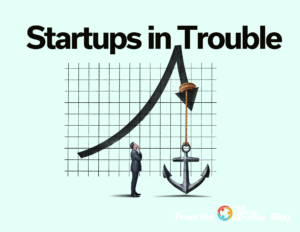
Startups in Trouble

3 min read What are some warning signs of startups in trouble? Often, startups will find themselves falling into unfavorable business conditions. Whether you are on the side of the startup or an investor, it is essential to recognize when a startup is in trouble and know how to manage it best. Warning Signs As an investor, you can often see warning signs of trouble in small ways before becoming full-blown in the startup. The following are warning signs to look out for: The CFO quits unexpectedly. The paychecks to employees bounce, and it’s called an “accounting error.” Information from the CEO becomes limited, and they don’t return phone calls. Administrative people are let go without explanation. They missed revenue expectations- again. Founders leave the company without six months’ notice. When you notice things seem out of the ordinary, it’s best to contact the team and ask for a straight-up answer. Managing In A Downturn When running a startup, there will be upturns and downturns. Managing a downturn takes a different approach than the upturns. In an upturn, it’s about increasing your top line, hiring new employees, and increasing market share. In a downturn, it’s about keeping the lights on, getting more productivity with fewer team members, and living to see another day. Here are some things you can focus on doing: Seek advice and guidance from others such as investors, mentors, and CEOs. Don’t delude yourself into thinking it’s better than it is, or it will turn around soon. Acknowledge that it’s a bad situation and take action. Get a little aggressive with the steps that you must take. Reconfirm your commitment to your company and mission statement. You’ll most likely need to take on extra responsibilities, which will require more of you. Downturns bring new market opportunities, so start looking for them. Common Startup Mistakes Startups make many mistakes. Here are two common ones to avoid: Thinking you must have the perfect product before you talk with anyone; including customers. Many startups go into development mode until they have their first product and then launch it to the world. Often with a thud. Involve customers at every step of the process. Customers should come before the product. Not after. Hiring the wrong people. Many startups hire people they know rather than people with skills. Some hire with the notion that the candidate ‘needs a job’ rather than ‘they have the skill.’ Other hiring mistakes include: Hiring B people instead of A people. Hiring someone to fill a specific position without fit to culture of the company. Hiring someone for work that is not yet defined or funded. The Must-Dos In running a startup, it’s essential to focus on the essentials of the business. In your strategy planning, identify the Must-dos. The Must-Dos have to get done. Beware of the Nice-to-Haves. If you hear yourself saying, “Wouldn’t it be nice if we did this?” it most likely will be taking you away from the essentials. Here’s how to protect your time in the business: The first rule is to say no, and often, freeing up time for the Must-Dos. Watch out for commitments that are recurring, such as meetings that happen every week. If you can’t say no entirely to a commitment, then bound your commitments. Don’t sign up with open-ended projects that aren’t well defined. Focus your efforts on the core aspects of the project, such as building the processes and enabling others to carry the project forward. Skew to the activities that can grow, then scale. Look for activities that directly contribute to the Must-Dos and focus on those. The Value of Confidence An entrepreneur raising funding must demonstrate confidence. Investors will look for someone who has faith in their plan, their team, and themselves. Often, entrepreneurs fake confidence and come off looking cocky. This is unfounded confidence. True confidence inspires others and persuades them to support the company. Investors look for this in the founder as he must attract others to join the team and customers and partners. Founders who inspire others have a greater chance of success at the early stage of a startup. Read more in the TEN Capital eGuide: http://staging.startupfundingespresso.com/negotiations-and-valuations/ Hall T. Martin is the founder and CEO of the TEN Capital Network. TEN Capital has been connecting startups with investors for over ten years. You can connect with Hall about fundraising, business growth, and emerging technologies via LinkedIn or email: hallmartin@tencapital.group

Read More »

Are you Ready for a Series A Fundraise?

1 min read Are you considering launching a Series A fundraise? For startups not requiring FDA, you will need the following before starting a Series A: A product with revenue preferably above $500K/year A growth plan to reach $10M annual revenue A strong team with growth company experience A credible funding plan to maintain growth with reasonable burn rates Updated financial proforma showing growth plan and use of funds Pitch deck showing your growth plan You May Have to Run a Seed + First If you are aiming for a target valuation, you may have to raise a Seed+ round of $500K to position the company with the proper KPIs and growth rates before pursuing the Series A. Read more from TEN Capital: http://staging.startupfundingespresso.com/education/ Hall T. Martin is the founder and CEO of the TEN Capital Network. TEN Capital has been connecting startups with investors for over ten years. You can connect with Hall about fundraising, business growth, and emerging technologies via LinkedIn or email: hallmartin@tencapital.group

Read More »

What do VCs Invest In?

1 min read  What do VCs Invest In? What do VCs Invest In? I’m often asked what venture capital looks for. When looking to invest, VCs look for emerging tech markets with strong growth projections. These sectors include blockchain, AI, Data Analytics, and other strong growth areas. They do this partly because there’s usually a strong deal flow and it’s easy to explain to limited partners. VCs also look for platform-based businesses, rather than solo products. They look for the following: Recurring revenue, Virality factors, Network effect components, Very large markets, Strong teams, and a scalable business model. Also, traction in your business and exits of other companies in the sector drive interest as well. Are You Venture Fundable? If you want to raise venture capital funding, then check these points to see if you are venture fundable: Do you have the following: Recurring revenue – Do you have recurring revenue in your model? Platform-based approach – Are you taking a platform-based approach to the product/service delivery, or do you sell one-off products? Data-centric – Are you capturing key data elements that improve your process and product? Strong Team – Do you have a strong team? Does each member bring expertise about their field to your business? Fast Growth (>50% YoY) – Are you growing at least 50% YoY? Large Target Market – Are you targeting a market over $1B? Read more from TEN Capital: http://staging.startupfundingespresso.com/education/ Hall T. Martin is the founder and CEO of the TEN Capital Network. TEN Capital has been connecting startups with investors for over ten years. You can connect with Hall about fundraising, business growth, and emerging technologies via LinkedIn or email: hallmartin@tencapital.group

Read More »

Team Is the Only Thing

1 min read  Team Is the Only Thing Vince Lombardi once said, “Winning isn’t everything, it’s the only thing”. In startup investing, “Team isn’t everything, it’s the only thing”. All problems will ultimately be solved by the team. If they can’t solve it, then the business will fail. In many years of angel investing, almost all failures trace back to the team not being up to the task. In reviewing a deal, the investor often makes the mistake of matching the team to the current problem but not future problems. In the earliest stages, one looks for a team that can build and sell the product, but will they be able to grow the business and later scale it? These are the future problems that must be solved. Hopefully, the CEO will change the team to match the needs of the business. Character Confidence Coachability In evaluating a team, there are elements to look for in a CEO for early-stage companies. The first is character. The CEO must have integrity and demonstrate character. Over time, the company will adopt the character of the CEO. If the CEO cuts corners, so will the rest of the company. The second is confidence. The CEO must have enough confidence in their vision, plan, and team that they can execute. Starting up brings challenges that require confidence to succeed. The third is coachability. This is especially true for first-time CEOs in that they don’t know what it is they don’t know. Experienced CEOs understand this better and recognize their limitations. CEOs who shun advice or forego coaching will run into problems later. Read more from TEN Capital: http://staging.startupfundingespresso.com/education/ Hall T. Martin is the founder and CEO of the TEN Capital Network. TEN Capital has been connecting startups with investors for over ten years. You can connect with Hall about fundraising, business growth, and emerging technologies via LinkedIn or email: hallmartin@tencapital.group

Read More »

How to Get the Most from Your Board Meetings

3 min read How to Get the Most from Your Board Meetings Board meetings are essential Board meetings are essential for gaining input and advice on how to run the business. To get the most out of your board meeting, start with an objective for the meeting, a set agenda, and prepared documents such as company financials. It’s helpful to get feedback from the participants before the meeting to adjust the agenda if necessary. This type of prep also ensures everyone comes prepared to tackle the objective. Recruit a board member to help you keep things on track by watching the clock and reminding the group when the time limit is up on a topic. Maintain the time allowed for each topic and create an offline conference call/meeting to handle topics that go over. Board meetings can be an invaluable resource to the CEO, but only if you manage it well. Preparing for A Board Meeting It’s essential to prepare appropriately for board meetings. You should set the meeting schedule well in advance, as much as a calendar year out. In addition to planned meetings, you may need to call additional board meetings in crises, such as when the company runs out of cash unexpectedly or gets hit with a lawsuit. Prepare documents far enough in advance, so the members have time to read the materials and prepare for the meeting. Use the board package to give the status updates and focus on the critical decisions to take. Use a standard format for the board package so the members can find things more easily. Set up the meeting agenda to cover the most important topics first. You may want to include a slide deck covering your planned talking points. These should consist of the company financials, including cash position. What to Expect Most of the work tasks performed in a formal board meeting are perfunctory duties such as approving minutes and reviewing financials and metrics. The board also weighs in on critical decisions around fundraising, strategy, and other topics. Board members will discuss whatever you put on the agenda. Ensure the agenda items are of strategic importance and prioritized, as the top items get the most attention while the lower items often get rushed. The more preparation you do before the meeting, the better outcome you’ll have. It takes time for board members to come up to speed on issues, so it’s best to send out background information before the meeting, so they have an opportunity to prepare. Read more from TEN Capital: http://staging.startupfundingespresso.com/education/ Hall T. Martin is the founder and CEO of the TEN Capital Network. TEN Capital has been connecting startups with investors for over ten years. You can connect with Hall about fundraising, business growth, and emerging technologies via LinkedIn or email: hallmartin@tencapital.group

Read More »

It’s About Execution and Momentum

2 min read  What do investors look for? It’s About Execution and Momentum. It’s About Execution Some startups think their business will succeed based on the idea, the technology, the market, or something else. They think their technology will win the day, or their ideas are so great, or the market is growing so fast that they will succeed based on it. For the investor, all of these are important but in the end it’s about execution. Execution turns the technology, idea, or market into a winning business. In your pitch, demonstrate your past execution successes and talk about how you will execute on the idea, how you will execute on your technology and how you will execute to penetrate the market. Investors determine investments based on the startup’s proven ability to execute. Traction vs. Momentum Many investors look for traction in a startup to gauge their progress. Traction declared as a single number on a pitch deck can be hard to judge as sufficient for investment. Many investors tell the startup, “nice traction, but we’d like to see more” Instead of traction look for momentum. Momentum demonstrates things are continuing to progress and move forward. Sales, team, product, and fundraising are the core four to look at. Investors look at these four because they represent the results of the startup’s work and not that of the market’s progression. Momentum must be shown over time in numerous updates by email, phone, or in person. It takes four touches before an investor gets a sense that there is momentum and it will continue. Startups should always have some engagement with customers. This includes alpha testing, beta customers, MVP customers, etc., so they have something to talk about with investors. For startups pursuing the enterprise sale, show your momentum through the sales funnel with your large customers. It typically follows the model of interest, qualification, trial negotiations, pilot test, full product launch, and ongoing support. Show how prospects are moving through the funnel and customers are upgrading and expanding seats. It’s the continuing forward progression that counts. Read more from TEN Capital: http://staging.startupfundingespresso.com/education/ Hall T. Martin is the founder and CEO of the TEN Capital Network. TEN Capital has been connecting startups with investors for over ten years. You can connect with Hall about fundraising, business growth, and emerging technologies via LinkedIn or email: hallmartin@tencapital.group

Read More »

Site Map

Scroll to Top